
[ad_1]
In today’s fast-paced world, it’s hard to imagine a time when communication wasn’t instant. However, just a few decades ago, sending a message to someone on the other side of the world took days, if not weeks, to arrive. The evolution of email has played a significant role in revolutionizing the way we communicate, making it faster, more efficient, and more convenient than ever before.
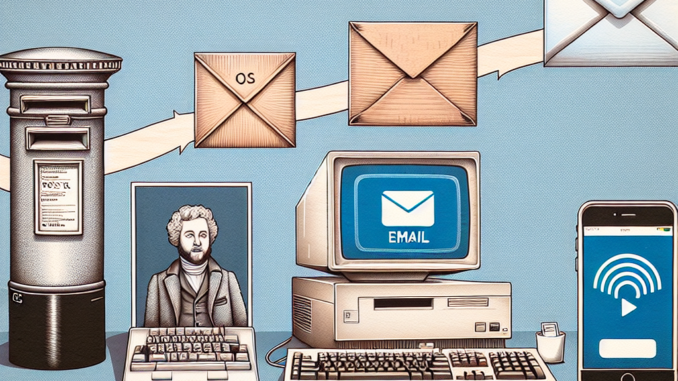
Before email, the primary mode of communication was through “snail mail,” which involved writing a letter, putting it in an envelope, affixing a stamp, and sending it through the postal service. This process could take days or even weeks to reach its destination, making it impractical for urgent matters or quick exchanges of information.
The first email was sent in 1971 by Ray Tomlinson, a computer engineer who was working on the ARPANET project, a precursor to the internet. Tomlinson sent a message from one computer to another using the @ symbol to designate the recipient’s location. This simple act laid the foundation for the modern email system we use today.
Over the years, email technology has evolved significantly, with the introduction of features such as attachments, folders, and spam filters. Email clients like Outlook and Gmail have made it easier than ever to organize and manage our messages, allowing us to communicate with multiple people simultaneously and access our email from anywhere in the world.
The rise of smartphones and mobile devices has further transformed email communication, allowing us to send and receive messages on the go. With the advent of push notifications, we can stay connected and respond to emails in real-time, making it easier to stay in touch with colleagues, friends, and family members.
In recent years, the popularity of instant messaging platforms like WhatsApp, Facebook Messenger, and Slack has challenged the dominance of email as the go-to communication tool. These platforms offer real-time communication, group chats, and multimedia sharing capabilities, making them more appealing for quick exchanges of information.
Despite the competition from instant messaging apps, email remains a vital tool for professional communication, with many businesses relying on it for internal and external correspondence. Email marketing is also a popular strategy for reaching customers and promoting products and services.
As technology continues to evolve, it’s clear that email will remain a crucial part of our communication toolkit. Whether it’s for work, personal, or marketing purposes, email offers a convenient and efficient way to connect with others and stay informed. The evolution of email from snail mail to instant communication has transformed the way we interact with each other, making it easier than ever to stay connected in a fast-paced world.
[ad_2]
Leave a Reply
You must be logged in to post a comment.