
[ad_1]
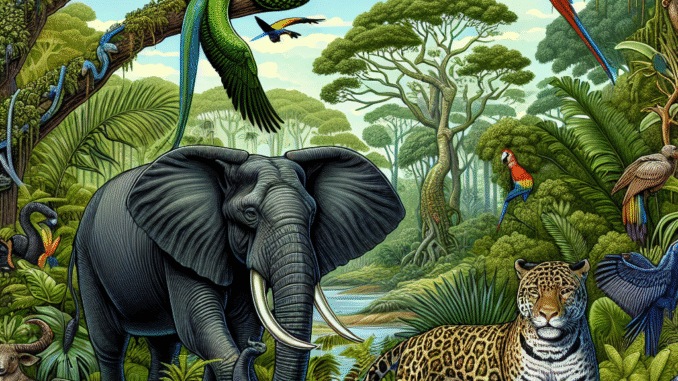
The dense, lush jungles around the world are home to a wide array of unique and diverse animal species. From the towering trees of the Amazon rainforest to the swamps of the Congo Basin, these ecosystems present a myriad of challenges for the creatures that call them home. In order to thrive in such harsh and competitive environments, jungle animals have evolved a variety of adaptations that allow them to survive and reproduce.
One of the most important factors in the survival of jungle animals is their ability to find food. Competition for resources in the dense foliage can be fierce, so many animals have developed specialized feeding strategies. For example, the long, prehensile tails of spider monkeys allow them to reach fruit high up in the canopy, while the sharp claws of jaguars enable them to catch and kill their prey. Some animals have even developed symbiotic relationships with plants, such as the leafcutter ant, which harvests leaves to cultivate fungus for food.
In addition to finding food, jungle animals must also navigate the complex terrain of their environment. Many species have evolved powerful limbs and muscles for climbing and swinging through the trees, such as the agile gibbons and orangutans. Others, like the sloth, have adapted to move slowly and stealthily through the branches to avoid predators. Some animals have even developed specialized camouflage to blend in with their surroundings, such as the leaf-tailed gecko or the walking stick insect.
Surviving in the jungle also means being able to defend against predators. Many animals have evolved unique defensive mechanisms, such as the bright colors and warning calls of poison dart frogs, or the sharp spines and toxic venom of the porcupine. Some species, like the chameleon, have the ability to change their color to blend in with their surroundings and avoid detection.
Adaptation is key to the survival of jungle animals, as their environment is constantly changing and evolving. Those that are able to quickly adapt to new challenges and threats are more likely to thrive and pass on their genes to the next generation. This process of natural selection, often referred to as “survival of the fittest,” ensures that only the strongest and most well-adapted individuals will survive and reproduce, leading to the continued evolution and diversity of jungle animal species.
In conclusion, the survival of jungle animals is a testament to the incredible adaptability and resilience of life on Earth. Through millions of years of evolution, these creatures have developed a wide range of adaptations that allow them to thrive in some of the harshest and most challenging environments on the planet. By studying and understanding these adaptations, we can gain a deeper appreciation for the complexity and beauty of the natural world.
[ad_2]
Leave a Reply
You must be logged in to post a comment.